Showing posts with label LGBTQ. Show all posts

Monday, March 20, 2017

When We Rise, My Life in the Movement , By Cleve Jones,* Reviewed by Nicholas F. Benton**


Cleve Jones is the author of the current best-selling book, When We Rise, My Life in the Movement (New York, Hachette Books, 2016) that formed the basis for the recent TV mini-series by the same name on ABC. This memoir of his life in the gay movement is unique for the first-person, eye-witness, up close and personal accounts it provides by a close associate of San Francisco's legendary gay icon Harvey Milk. It offers spellbinding descriptions of Milk's influence, his horrific assassination in November 1978, and of Jones' growing role in the LGBT movement since.

Jones, who invented the idea for the Names Quilts response to the AIDS crisis in the 1980s that brought home the personal dimension of the epidemic, had a major role as a consultant in the making of the 2008 Academy Award winning film, Milk, when he parlayed his friendships with its screenwriter Justin Lance Black and producer Gus Van Sant into an extraordinary portrayal of Milk's career. Sean Penn won an Academy Award for his portrayal of Milk, Emile Hirsch portrayed Jones, who approved of the choice (“except that I am taller,” he wrote), and Black won an Oscar for his script.

In fact, Jones was sitting with Black at the February 2009 Academy Awards ceremony when Black won the Oscar and delivered an acceptance speech that was a first of its kind. Speaking openly of being gay, himself, Black said in words that was an amazing affirmation to millions watching on TV, “If Harvey Milk had not been taken away from us 30 years ago, I think he'd want me to say to all the gay and lesbian kids out there who have been told that they are less by their churches, by the government, or by their families that you are beautiful, wonderful creatures of value and that no matter what anyone tells you, God does love you and that very soon, I promise you, you will have equal rights federally, across this great nation of ours.”

Jones wrote that “I watched from my seat and could not stop crying,” just like myself, and millions of other Americans, I am certain, including LGBT persons of all ages, their loving families, friends and supporters. It marked after 31 years a national redemption for the murder of Milk and a prescient forecast of the U.S. Supreme Court ruling that confirmed that the equal protection under the law guarantee of the U.S. Constitution does, indeed, extend to LGBT persons, including to their right to marry, on June 25, 2015, another day I could not stop crying.

In Jones' memoir, he writes about how the young, post-Stonewall gay movement
“saved my life, twice:” first, in 1971, “as a frightened teenager, when I learned of the gay liberation movement and flushed down the pills I had hoarded to end my life,” and again in 1994 “when I was dying of AIDS,” when “the movement stormed the Food and Drug Administration, confronted the pharmaceutical industry's greed, and exposed the shameful lack of government response” leading to a life-saving treatment regimen for the epidemic that had killed 600,000 other mostly gay males in the U.S. The LGBT movement, he wrote, “saved my life and gave it purpose and connected me to other people who also sought love and purpose in their lives.”

But Jones' eyewitness to the LGBT movement was not without plenty of pain, including the Milk assassination and the AIDS epidemic. His vivid and penetrating recollections of these experiences and so much more make his book one of the more important contributions to the growing library of indispensable LGBT literary works.

I don't recall, but I have a strong sense that I met the young Jones, who escaped his family to show up as a teenager in San Francisco in 1972. I was still in the midst of my most energetic gay activism at that same time. I co-founded the Berkeley, Calif., chapter of the Gay Liberation Front and was a major contributor to the Berkeley Barb and Gay Sunshine counterculture newspapers. Jones wrote, “In those days, one could probably count the number of self-described 'gay rights activists' on the fingers of two hands.” Well, one of those fingers belonged to me.

He was 18 then, and I about 10 years older, and we traveled in the same neighborhoods of downtown San Francisco then, from Market Street, to the Tenderloin to Polk Street, from the front of Flagg Brothers and the lunch counter at Woolworth's, to Ritch Street and Bob's Burgers.

He was known as the “class sissy” in Phoenix before coming to San Francisco, and I was described as one among “offbeat liberation fairies” by the openly-gay San Francisco Chronicle Randy Shilts in his book, The Mayor of Castro Street, the Life and Times of Harvey Milk (1982), because my politics was more radical than simply a call for equality.

Fast forward to 1977, as the ABC mini-series did, Jones returned after long periods of travel, to volunteer for the first Milk campaign running for the San Francisco Supervisors from a particular district (encompassing the Castro and Haight), Milk's first and only electoral victory.

Jones' recollections of that campaign and the subsequent incredibly politically-dense period that followed are the most compelling part of his book, from the demonstrations and riots all the way to a vivid, stomach-churning description of the slain Milk's body as it lay for hours on his City Hall office floor.

Jones' memoir skips over other important years, namely 1983-1984, when controversies over how to react to the massive and horrible deaths from AIDS that claimed so many gay men before anything like a cure was found. The pain and panic was too great, perhaps, although Shilts, in his And the Band Played On: Politics, People and the AIDS Epidemic chronicle of the AIDS epidemic published in 1987, wrote that Jones had reluctantly aligned with those in the San Francisco gay leadership who called for the closing of the bathhouses.

By Jones' own account, he seldom shied away from taking strong and controversial positions in the often-contentious gay movement. To this day, he remains on his feet, so to speak, to present one more gift to his catalogs of enormous contributions to the movement, his new memoir. We can expect that much more is still to come.


Print Length: 305 pages
Page Numbers Source ISBN: 0316315435
Publisher: Hachette Books (November 29, 2016)
Publication Date: November 29, 2016
Sold by: Hachette Book Group

*


** Nicholas F. Benton is the owner and editor of The Falls Church News Press. He is also the author of
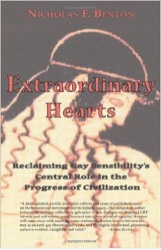
Extraordinary Hearts: Reclaiming Gay Sensibility's Central Role in the Progress of Civilization


Wednesday, December 28, 2016

Book Review: How to Survive a Plague, The Inside Story of How Citizens and Science Tamed AIDS, By David France

Review by Nicholas F. Benton (author of Extraordinary Hearts: Reclaiming Gay Sensibility’s Central Role in the Progress of Civilization)

David France has been involved in the New York gay scene since, by coincidence, almost precisely the time that the AIDS epidemic was first noted in the press in July 1981. So, aside from the previous decade following the 1969 Stonewall Riots, as a journalist he saw the plague and the gay community’s devastation by it and fight against it first hand. In 2012, he wrote, produced and directed a film documentary by the same name that was so outstanding it was nominated for an Academy Award.

For me, that documentary remains, even since this book, uniquely incredible and a hard act to follow. It is a brilliantly compelling and moving account, with a lot of archival footage, of the ACT UP (AIDS Coalition to Unleash Power) movement composed of mostly AIDS sufferers from its March 1987 founding. By that point, tens of thousands of mostly homosexual men in the U.S. had already died horrible deaths, everyone infected was doomed to the same fate, and there was no effective cure or treatment in sight.

But ACT UP’s highly publicized civil disobedience actions at the White House gates, the National Institutes of Health and elsewhere and its success in gaining inclusion on official boards evaluating experimental treatment options, is widely credited, including by the nation’s foremost public health official Dr. Anthony Fauci, with playing a critical and indispensable role the discovery of an effective treatment by 1996.

In late 1996 when, having been an early post-Stonewall gay activist myself, I learned that Time magazine had named Dr. David Ho, a long-time AIDS researcher, its ‘Person of the Year,’ I breathed a deeper sigh of relief than for any time in the previous 15 years. It was an affirmation that, indeed, a life-saving treatment for the hideous AIDS had been found. Dr. Ho is not even mentioned in France’s documentary or book because to France’s mind, and undoubtedly in reality, it was the ACT UP activists and the researchers willing to work with and learn from them who finally came up with the right combination of protease inhibitor treatments that produced an immediately efficacious and enduring life-saving treatment.
From France’s work it is shown how without the input of a faction of ACT UP that formed itself as the Treatment Action Group (TAG) to work on technical research issues the existing efforts whether by the National Institutes of Health or private pharmaceutical companies were fragmented and out of touch with one another.
Despite annual world conferences on AIDS research, “there was no global strategy,” so TAG members had to devise a “National AIDS Treatment Agenda” to put the disparate research efforts into one comprehensive strategy.

It was in 1995, after the first discovery of the “protease inhibitor” that an “activist- proposed drug design” combining therapies was introduced, and almost immediately began to work wonders. Within 30 days, very ill patients became symptom free, Fauci said, calling it “a Lazarus effect.”

The treatment was provided to hundreds of thousands of AIDS patients in the U.S. and then overseas, especially in Africa, and began saving literally millions of lives.

As with his film documentary, France does an excellent job of telling the story in his book, including with some key information the documentary didn’t include, such as exactly how ACT UP came to be formed in 1987. Earlier activist split offs from existing gay organizations, like the Lavender Hill Mob and the Swift and Terrible Retribution Committee, had begun “zaps,” spontaneous street theater and office takeover demonstrations, following a solemn but massive, 200,000-strong June 1986 Gay Pride parade that was greeted with newspaper headlines reporting that a Supreme Court decision had ruled 5-4 to uphold a Georgia gay sex ban.

That December, an anonymous effort pasted lower Manhattan with three thousand black posters with an inverted pink triangle and the words “Silence = Death.”

Larry Kramer, having been on a hiatus after the highly-successful production of his hard-hitting AIDS-themed play, “The Normal Heart,” decided it was time to spark something new.

Ah yes, Larry Kramer! This man had enraged the official gay community in 1978 with the publication of his best selling novel, Faggots, because it exposed the depths of sexual promiscuity and depravity that much of the New York and other urban gay scenes had descended to by then. He was subjected to a massive display of denial and angry insistence on keeping such “secrets” away from the outside world. The leadership, such as it was, of the so-called gay movement then was composed mostly of gay sex club, bathhouse and bar owners, many with ties to the Mob, in an alliance with the sex-addicted often-nightly patrons of their establishments insisting that gay liberation was synonymous with massive amounts of anonymous sex.

Kramer was like an Old Testament prophet sounding an alarm. Many never forgave him from that time forward, but the evidence is clear from the wider corpus of his work that he was motivated not out of hate, anger or personal repression, but out of a deep love and compassion for gay people. (It is relevant that science learned just this year that the HIV virus that causes AIDS was present in the blood of many gay men collected in the early 1970s, at the time the “sexual revolution” first broke out. The HIV did not enter the picture in the mid-1970s, as previously thought, by introduction to the U.S. probably from Africa. It had been here much earlier, and sexually-active gay men were playing Russian roulette since 1970 not only with all the other STDs of the day, but unbeknownst to them, also a virus that would wind up killing at least 600,000 of them.)

This was shown when the first public reports of a gay “cancer” was first reported in July 1981. It was Kramer to leaped into action to organize a grass roots political response, the formation of the Gay Men’s Health Crisis. But in a subculture swimming with petty jealousies and fear, Kramer’s insistence on strident action was too much, and he became marginalized.

Still, that only led to his authorship and production of a quasi-autobiographical “The Normal Heart,” the powerful play that exposed the plight of sick and dying gay men, and a pathetic lack of government response, to a much wider audience.

Then, in 1987, when the effort against AIDS was going absolutely nowhere, it was Kramer, again, who provided the spark for the formation of ACT UP that ultimately got the gay community activated to get the results it needed.

Due to a last-minute cancellation, Kramer got to fill the program for the March 1987 meeting of a monthly speaker series at the Gay and Lesbian Community Center. This was the opportunity he needed, and he didn’t miss it. He organized an array of activists to show up. “I’m going to try to organize a civil disobedience group,” Kramer said to a friend, as France quoted him. “I’m putting friends in the audience as plants. When I call for people to help me organize a demonstration, I need you to stand up and join in and rabble rouse.”

Some 250 gay men showed up. As France wrote, “Kramer’s savage oratory power, honed over his years of screed writing, swelled as he read his prepared remarks. ‘If my speech tonight doesn’t scare the shit out of you, we’re in trouble,’ he told them. ‘I sometimes think we have a death wish. I think we must want to die. I have never been able to understand why we have sat back and let ourselves literally be knocked off man by man without fighting back. I have heard of denial, but this is more than denial – it is a death wish!”

France wrote that the presentation morphed the group into a “Capraesque town hall meeting” full of energy and animated talk. He wrote, “The fuse caught fire…Kramer’s strategy had worked. Something brand new was afoot.”

Still, people accused Kramer of wanting to become famous for this effort. It is a sad thing, but a reality that people who can only think in terms of such things, or in terms of hate or vengefulness, can only assign similar motives to others.

To an observer like me, it is clear that everything Kramer did, including his stridency, was done more out of love than anything else. The world still won’t acknowledge that, in the context of how bad the AIDS plague was, he was right from the start and almost all the others were wrong.

France is ambiguous about Kramer in his book. On the one hand, he wrote in his introduction, “No individual was more responsible for galvanizing the AIDS movement than Kramer. His plays, books and essays over the years pushed the gay community to demand that the world take notice.”

But in another place he claimed that Kramer did almost more harm than good, although not with the viciousness of gay blogger Andrew Sullivan in his review of France’s book in the New York Times Book Review of Nov. 27. Sullivan wrote, “There was the despised Larry Kramer, fresh off excoriating gay men’s sex lives in his novel, Faggots, who bravely confronted the core problem of transmission, but who also displayed a personal viciousness that derailed the movement as much as galvanized it.”

In his book, France underscored his ambiguity about Kramer by quoting a gay leader who wrote a highly critical letter to Kramer, saying, “You should beg the forgiveness of every gay man who you have caused pain,” but then credited Kramer “with raising the visibility of the epidemic like no one else by working to become, ‘like Goethe, the personification of an era much linked with sadness and death.’”
The most serious shortcoming of France’s work is in his effort at applying pop psychology to Kramer and others in the struggle, saying Kramer owed his stridency to a “stern father,” and his tendency “to see the world as a battle between aloof parent figures and rejected children.”

How about the fact that an entire generation of gay men were being wiped out by the most heinous of incurable diseases being his motivator? The pop psychology is just so much BS and really a terrible take-down of Kramer’s motives.

There is a valid point to the charge of “tone policing” that feminists are increasingly talk about. It is a silencing tactic that protects privilege and silences people who are hurting, often targeting women. (In Keith Bybee’s book, How Civility Works, he notes that feminists, Black Lives Matter protesters, and anti-war protesters have been told to “calm down and try to be more polite.” He argues that tone policing is a means to deflect attention from injustice and relocate the problem in the style of the complaint, rather than to address the complaint.”) Kramer continues to be a huge target of this kind of “tone policing.”

Surely, the heroic role of many in the ACT UP struggle cannot be ignored, the work of Peter Staley, Bob Rafsky, Mike Harrington, Greg Consalves, Spencer Cox, Jim Eigo, Ann Northrup, Iris Long, David Barr, Derek Link, Gregg Bordowitz, Bill Bahlman, and of course, their predecessors like Joe Sonnabend, Michael Callen, Richard Berkowitz, Mathilda Krim and many others.

Something that France’s book does not include is the added level of pain above the medical and physical pain of AIDS victims, worst of all being the brutal and complete rejection of young AIDS victims by their own parents and families throughout that period.

France tells the stories of a couple AIDS victims who were being cared for by their parents as they expired. But there were many, many more cases of total rejection of AIDS victims by their own parents, and left to die with an emptiness in their hearts even more painful than their physical illness.

Even today, the rejection of young gay men and women by their families is heartbreaking, with an estimated full 25 percent of homeless persons being young gays.

The story of ACT UP is not so much about glorified heroism as about a resolve to live. Staley said when he and others were about to toss the ashes of loved ones over the White House fence in 1992 that, “Some are making something beautiful out of the epidemic, but there’s nothing beautiful about a box of ashes and bone chips. There’s no beauty in that.”

When France wrote of the real breakthrough being found in 1996, he confessed, “It had been many years since I had cried – maybe I hadn’t shed a tear since Doug’s memorial service – but now tears rolled down my cheeks. When I caught my breath again, it came in sobs. Was it over? Was the long nightmare passed?”

“Tears filled Spencer Cox’s eyes,” he wrote. “’We did it,’ he whispered to the person sitting beside him. ‘We did it. We’re going to live.’” I knew the feeling, as every gay man in the nation must have that day.
Final point, I suggest that France’s work be examined from the standpoint of what he doesn’t say about how a new plague might be avoided.


* Hardcover: 640 pages
* Publisher: Knopf; 1 edition (November 29, 2016)
* Language: English

Sunday, October 9, 2016

Extraordinary Hearts: Reclaiming Gay Sensibility’s Central Role in the Progress of Civilization, by Nicholas F. Benton

Extraordinary hearts is an extraordinary scholarly work. Mr. Benton, a seminary graduate, a career journalist, and a newspaper owner and editor, was there when being gay was a dirty little secret, when no institution, college or religion would open its doors to the LGBT community. He has a unique insight into the lives of Oscar Wilde, Tennessee Williams,and Christpher Isherwood and others, therefore it is no coincidence that the book is dedicated to the first three. LGBT study is a relatively new area of scholarly endeavor, and the field needs new, groundbreaking books. Mr. Benton's book is one of those groundbreaking books. It is serious, scholarly, hard hitting, very personal, compassionate, and controversial. It won't be the last word in LGBT studies, but it will be a classic that will be studied for many decades to come. It sets a new standard for a proud LGBT identity as that community achieves its full equality.


Print Length: 344 pages
Publisher: Lethe Press (September 6, 2013)
Publication Date: September 6, 2013
Sold by: Amazon Digital Services LLC